
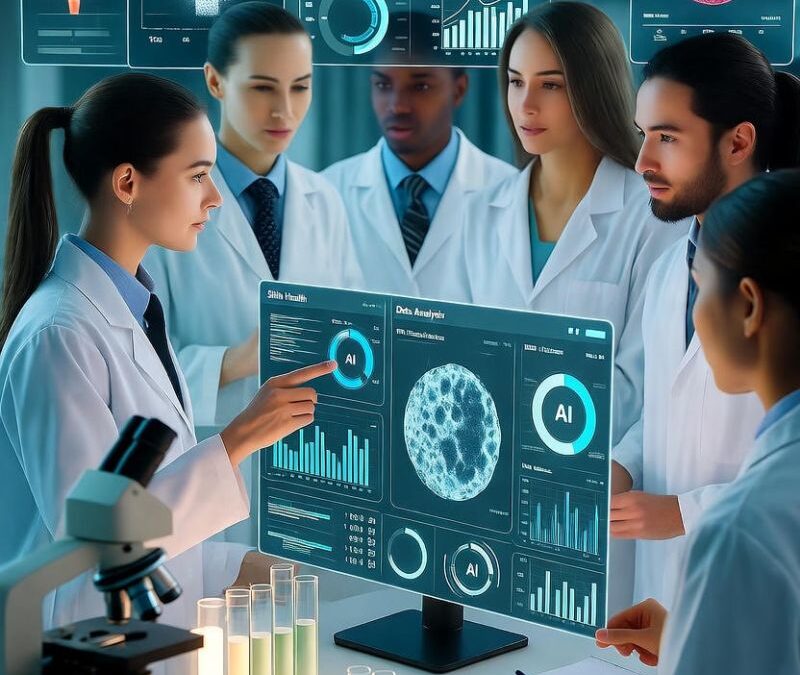
Revolutionizing Anti-Aging: Launching the Eternal Youth Program – a multi-year national dataset campaign in South Africa to measure every facet of skin health—from elasticity to collagen density—using advanced tools like Miravex Antera 3D, Cutometers, Corneometers, Tewameters, high-frequency ultrasound, and Sebumeters.
Who’s in?
#AntiAging #BeautyTech
Imagine building the world’s most comprehensive anti-aging dataset with the Eternal Youth Program: Over years, we’ll track up to 1000 participants nationwide, capturing real-time data on cosmetic Growth Factors (GFs) efficacy through non-invasive scans, hair follicle analyses for GF biomarkers, and quarterly monitoring. This isn’t just data collection—it’s a foundation for AI-driven personalization that predicts and optimizes skincare outcomes for diverse users.
To make the Eternal Youth Program a success, we’re assembling a lean, agile team focused on efficiency and impact:
- Project Lead (Domain Expert): Guiding the strategic vision, formulating key questions, and ensuring alignment with business goals.
- Data Scientist/Analyst: Handling cohort analysis, pattern identification, and machine learning models for predictive insights—drawing on tools like Python with Scikit-learn, Pandas, and cloud platforms such as Google Cloud Vertex AI or AWS SageMaker.
- Data Engineer: Building robust pipelines for data collection, quality assurance, and preparation, integrating platforms like Amplitude or Mixpanel for behavioral analytics.
The Eternal Youth Program emphasizes standardized data from the start, aligning with industry benchmarks like INCI nomenclature, ISO 22716 (GMP for Cosmetics), OECD guidelines for testing, and frameworks like CDISC for clinical data interchange. This ensures interoperability, credibility, and regulatory compliance, making our datasets and AI tools licensable to major cosmetic companies under annual arrangements.
Skin types differ significantly across ethnic groups, impacting how aging manifests and which products are sought. On the Fitzpatrick scale, lighter skin (Types I-III, often in White populations) has less melanin, leading to higher susceptibility to UV damage, wrinkles, fine lines, and loss of elasticity—prompting greater interest in anti-aging solutions like GF products for collagen boosting and rejuvenation. Darker skin (Types IV-VI, common in Black, Coloured, and Asian groups) offers better natural UV protection but is more prone to hyperpigmentation, scarring, and uneven tone, with potentially different GF responses focused on barrier repair and pigmentation control.
The Eternal Youth Program’s study representation: approximately 86% White, 4% Black, 4% Asian, and 2% Coloured participants. This aligns with trends where White populations, facing more visible photoaging, are often more inclined to adopt premium GF-infused products for targeted wrinkle reduction and skin firmness.
Adjustments for Key Variables: Climate, Age, and GF Biomarkers
In the Eternal Youth Program, to ensure robust, generalizable insights, the study incorporates targeted adjustments for environmental, demographic, and biological factors that influence GF efficacy and skin aging.
- Climate Adjustments: South Africa’s diverse climates—from the Mediterranean conditions in the Western Cape to subtropical humidity in KwaZulu-Natal and semi-arid dryness in the Northern Cape—can accelerate skin aging through mechanisms like oxidative stress from pollution and heat, altered humidity impacting hydration, and increased UV exposure in higher temperatures. For instance, higher heat and humidity may exacerbate inflammation and microbial growth on the skin, while arid conditions can lead to dehydration and barrier dysfunction. We adjust by stratifying participants into regional cohorts based on climate zones, collecting local environmental data (e.g., temperature, humidity, pollution levels via integrated APIs or participant-reported metrics), and using multivariate models to control for these variables. This allows us to isolate GF effects—such as enhanced collagen production in drier climates versus barrier repair in humid ones—and tailor AI predictions accordingly, ensuring recommendations account for real-world environmental stressors.
- Age Adjustments: Aging is a core driver of skin changes, with chronological and photoaging effects varying across life stages; for example, collagen loss accelerates after age 30, leading to wrinkles and reduced elasticity. In cohort studies, age must be properly accounted for to avoid confounding results, often using age-period-cohort (APC) analysis to disentangle age effects from temporal trends or generational differences. We segment participants into age-based cohorts (e.g., 25-40 for early prevention, 41-60 for mid-life correction, 61+ for advanced rejuvenation), incorporating age as a covariate in statistical models like mixed-effects regression. Baseline demographics (captured in CDISC-compliant DM domains) include age, enabling longitudinal tracking of GF responses—such as faster efficacy in younger groups due to higher baseline stem cell activity versus slower but sustained benefits in older participants. This refines AI personalization, predicting outcomes like reduced wrinkle depth more accurately for specific age brackets.
- GF Biomarkers Adjustments: Growth factors (e.g., FGF, EGF, PDGF) are key signaling molecules in skin repair, but their efficacy varies by individual biology; biomarkers provide measurable indicators of response, such as protein expression levels in tissues. Hair follicle analysis serves as a non-invasive proxy for skin GF activity, as follicles share stem cell niches with epidermis and can reflect systemic GF dynamics through gene expression or protein assays. We incorporate quarterly hair follicle sampling (via plucking or micro-biopsy) to quantify biomarkers like FGF9 for cycle transitions or VEGF for vascular support, using qRT-PCR or ELISA techniques. Adjustments involve baseline and ongoing biomarker profiling to stratify cohorts (e.g., high vs. low endogenous GF expressors), feeding into machine learning models for predictive dosing—such as boosting topical GF application for low-biomarker individuals to enhance collagen synthesis and hair/skin regeneration.
Phased for impact in the Eternal Youth Program:
Year 1: Data Accumulation: Nationwide rollout via clinics, building cohorts with up to 1000 participants for behavioral patterns, focusing on ingredient safety, efficacy metrics (e.g., hydration levels, wrinkle depth), and toxicological data.
Years 2-3: Predictive Insights and Expansion: Leveraging machine learning to predict GF outcomes, customizing models for user segments while scaling the cohort.
Ongoing: AI Optimization: Machine learning models for predictive GF efficacy and personalized recommendations, transitioning to automated, dynamic segmentation.
Ethics First in the Eternal Youth Program: GDPR/CCPA compliance, anonymized data, informed consent, bias audits, and proactive checks for fairness embedded from day one. We’re not just compliant—we’re building trust through transparent, representative data handling.
Cosmetic companies: Partner with the Eternal Youth Program to co-develop this game-changing AI tool—share data, run pilots, or innovate formulations. Gain exclusive insights that supercharge your products and customer loyalty, all backed by standardized, verifiable datasets ready for your R&D pipelines.